EP1: The History of FTNN

Episode 01 · Now Streaming
The Fetal Frontline — The FTNN Podcast

The History of FTNN.

In 2015, one nurse saw a gap no one else was filling — and decided to do something about it. Ten years later, the Fetal Therapy Nurse Network has grown from 25 founding members to nearly 440. Founder Katie Francis sits with host Kris Rimbos to trace how it started, what almost stopped it, and where it's going next.

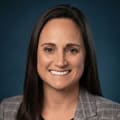
39 min Apr 2026 Topic: Origin story Featuring: Katie Francis, RN
Kris Rimbos
Host
Kris Rimbos
Katie Francis
Guest
Katie Francis
EP1 · The History of FTNN (Kris and Katie)
The Fetal Frontline — FTNN Podcast
Cold Open: Two Patients, One Journey
0:0039:16

The episode in five numbers

10 yrs
Since Founding
FTNN turned 10 in 2025 — the same decade fetal therapy went mainstream.
25440
Members
From a founding cohort of 25 to nearly 440 nurses, coordinators & allied professionals.
13
Fetal Centers in 2009
When Katie started, there were only 13 fetal therapy programs in the country to learn from.
2 patients
in every encounter
There is no other nursing specialty where the clinician is simultaneously caring for two lives.

Meet the voices

Tap either card to flip for a full bio.

Kris Rimbos Host Tap to flip
The Fetal Frontline
Kris Rimbos, RN
Fetal Nurse Coordinator · FTNN Board
Host · FTNN Conference Committee

Kris Rimbos, RN

Fetal Nurse Coordinator · Board member, FTNN

Host of The Fetal Frontline and a long-standing FTNN board member. Kris helped build FTNN's web presence and social channels, chaired the conference committee, and spent her career coordinating fetal care at a major US fetal center.

She and Katie have collaborated since FTNN's earliest board — most notably on the core competencies now rolling out across US and Canadian fetal programs.

Katie Francis Guest · Founder Tap to flip
Founding President, FTNN
Katie Francis, RN
SSM Health Cardinal Glennon · St. Louis
Founder · FTNN

Katie Francis, RN

SSM Health Cardinal Glennon · St. Louis, MO

Katie trained in the NICU, then as a neonatal and pediatric transport nurse, before stepping into the brand-new role of fetal nurse coordinator in 2009 and helping launch her hospital's fetal surgery program from scratch.

In 2015 she founded FTNN — her proudest professional accomplishment. In 2024 she received the inaugural Lori J. Howell Excellence in Fetal Nursing Award.


What makes fetal nursing unlike any other specialty

Before the history of FTNN, some grounding. Four truths about the field that shape everything the network was built to support.

Two patients, one encounter
Katie doesn't know another nursing field where you simultaneously care for a pregnant person and their unborn baby, in the same breath, in the same chart.
A specialty of a specialty
Fetal therapy sits inside MFM, which sits inside OB — a niche within a niche. You need fluency in prenatal, fetal development, neonatal, and NICU care.
The coordinator of coordinators
A single day can stack MFM, genetics, cardiology, neurosurgery, anesthesia, social work. The fetal nurse is the conductor — they make it work for one scared family.
Emotionally high-stakes, constantly
Every patient has just heard something might be wrong with their baby. The work is deeply rewarding — and carries real moral weight every single day.

Two lives. One care plan.

Katie puts it simply: "You're really, truly caring for two patients — which is unique. I don't know that there's any other nursing field where you're caring for two patients at once." That single fact drove FTNN's founding and still shapes how the network supports its members today.
Two concentric rings — mother and fetus — connected by a luminous thread

Chapter guide

Eleven chapters, each with a pull-quote and the three things worth walking away with. Tap "Open deep dive" to unpack the context — who NAFNet is, what SBAR means, why 1968 matters.


Why are we all recreating the wheel? If we can work together, we can standardize work and ultimately improve outcomes and the care for mothers and babies.
Katie Francis — on what sparked FTNN

A 17-year arc — from one nurse to a national network

Eleven milestones spanning 17 years. Katie's path starts in 2009 — years before FTNN existed.

2009
Katie interviews for a brand-new role
Only 13 fetal centers in the US. Katie reads the few articles that exist, then helps start her hospital's fetal surgery program from scratch.
2009–2015
Learning by networking
She reaches out to every fetal center that will take her call. At conferences, she meets other coordinators building identical processes in parallel.
2015
FTNN is founded — 25 members
First meeting held in conjunction with NAFNet. Jody Farrell (UCSF) delivers the first educational session. Dr. Bill Polzin blesses the idea.
~2020
Five-year board planning
First formal one-, three-, and five-year plans. The group shifts from grassroots to a real board with strengths and weaknesses identified.
~2022
Group memberships open the doors
Modeled after NAFNet: whole fetal centers can now join, not just individual nurses. Membership grows faster than ever.
2024
First standalone FTNN Conference
"Honestly like a professional dream come true." The core competencies debut — the first real training guidebook for new fetal nurses.
2024
The Lori J. Howell Award
Katie receives the inaugural Lori J. Howell Excellence in Fetal Nursing Award — named for the pioneer who blessed the network at its start.
2025
~440 members
FTNN turns 10. Membership has nearly 18×'d. Genetic counselors, sonographers, and social workers are first-class members.
Next
Nursing certification
The biggest milestone yet to accomplish. Research, publications, competencies, FTEs — the criteria are being assembled.
Next
A bigger advocacy voice
Policy development. National-level conversations about who fetal care patients are and what their rights look like.
Oct 2026
FTNN Conference · Chicago
The second standalone conference. Expect bigger crowds, new faces, and the people Katie says are "coming home."
Milestone 1 of 11
Drag, swipe, or tap arrows

The people who shaped FTNN

Katie is careful not to name too many contributors — she worries she'll leave someone out. But three people are named in this episode who made the network possible at its birth. Tap any card for context.

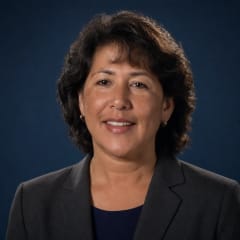
Katie Francis
Katie Francis
Founder
JF
Jody Farrell
UCSF · Pioneer
LH
Lori Howell
CHOP · Pioneer
WP
Dr. Bill Polzin
NAFNet · Ally
Kris Rimbos
Kris Rimbos
Board · Host

Peer support in action

Four real ways the network shows up — in admin meetings, in hotel lobbies, in moments of moral fatigue, and in life outside the fetal center.

When Katie needs to convince her administration of something — a staffing ratio, a new piece of equipment, a process change — she doesn't walk in alone.

"How did you help your admin see how important this is?"
Katie shares FTNN's SBAR templates — Situation, Background, Assessment, Recommendation — that peer centers have used to make their case to hospital leadership. "Again, there's no need to recreate the wheel."

One of Katie's proudest moments is hearing that a nurse in California went to visit another center to learn what they needed at home.

Doors that used to be closed
Before FTNN, centers didn't routinely "share their secrets." Now nurses host each other — full-day visits, observed mapping sessions, real practice transfer. "It made me so happy."

A friend of Katie's told her, "My nurses are having some moral distress right now." Katie's response: so are ours.

Validation is not a luxury
Hearing that another center is facing the same emotional toll transforms how a coordinator talks to her team the next morning. It reframes "I'm struggling" from personal to professional — and it becomes the foundation for next year's conference session.

The network Katie built wasn't only about fetal care. She shares one story that nearly didn't make it into the episode.

A pediatric illness, and a call list
When a family member was diagnosed with a serious pediatric illness — nothing to do with fetal care — Katie reached out to her FTNN friends at multiple pediatric hospitals. Connections with oncology departments followed. "Those connections extend even past fetal."

Katie's playbook — seven lessons from ten years

Illustration of hands releasing a pink thread into a constellation of nodes

"Check your ego at the door."

The single principle Katie returns to the most. Something she started becomes something everyone owns. When someone changes it in a way she wouldn't have, she asks herself: is this about my ego, or what's good for the network?

"If we can work together, we can standardize work and ultimately improve outcomes and the care for mothers and babies."
Sharing SBAR templates, delivery protocols, and orientation checklists isn't cheating — it's how a specialty grows up. If another center already solved it, learn from them.
"There's always gonna be competition, right? That's just the way it is. But I tried to take the competitive nature out of it and keep focusing on collaboration."
Hospitals are businesses. Centers compete for patients. FTNN's mindset shift: inside this room, we're peers first.
"I also realized that I had to be a little vulnerable and put myself out there… I can remember talking about a delivery we did and someone saying I cannot believe that you guys did it that way. I felt very judged."
The founder goes first. If Katie hadn't risked being judged, no one else would have shared their hardest cases either — and FTNN would have been a directory, not a community.
"If we put each other down or we criticize or we judge, then people won't share and then people won't learn."
This became an unwritten FTNN norm from the first meeting. It's why the Slack channel, the conference hallway, and the board calls still feel psychologically safe a decade later.
"It's something I started, but it's definitely not mine. It's everybody's… I really think — is this about my ego or is this about what's good for the network?"
When a decision cuts the wrong way, Katie asks the question twice. If the answer is ego, she steps back. If the answer is network, she accepts it.
"I don't have to have my hand in every little piece of FTNN because there's so many people that wanna be involved. For more people to get involved, some people need to make room for them."
Stepping back is active work. Katie calls it out as self-care — and as the thing that lets her watch the network "shine and grow."
"At the end of the day, everything we do should come back to providing excellent care to pregnant women and their unborn babies."
Every FTNN decision — mission evolution, interdisciplinary expansion, certification pursuit — gets tested against that single sentence.

Coming home at conference

Katie calls the annual FTNN Conference her self-care. "It feels like coming home." Hugs, camaraderie, friendships maintained over text through the year. And if you're new? "Come find me and I'll be your buddy for the day."
Eight nurse silhouettes connected by glowing pink threads

What's next for FTNN

Four fronts Katie says the network is working toward — some near-term, some generational.

The biggest milestone yet to accomplish. Katie holds her own neonatal nurse certification. Fetal nursing doesn't have one — yet.

Criteria FTNN is assembling

  • A body of peer-reviewed research in fetal nursing care
  • Published FTNN core competencies (rolled out 2024 ✓)
  • Agreed-upon role definitions and FTE calculations
  • Conversations with certifying bodies already underway

A bigger voice in national policy development — so the people who care for these patients are in the room when decisions affecting them get made.

Why it matters now
Decisions made at the federal and state level affect patient access to fetal intervention, insurance coverage, and care coordination. FTNN's scale now gives it standing to weigh in — "and we're getting there, it's slow, but we're getting there."

Katie read an article the morning of this interview about precision medicine and the genetic era of fetal medicine.

The nurse's role in a changing field
"We may not be doing the basic science research — but we need to keep educating our nurses about what's out there, what's happening, and how we support patients through those fetal therapies."

Not everybody has the same access to fetal intervention. FTNN is investing in research on the whole pregnant patient — emotional wellbeing, equity, the pieces that don't show up in a basic-science trial.

Research FTNN leans toward
How do we care for the emotional weight of a scary diagnosis? How do we make sure a complex fetal therapy reaches patients whose zip code would normally exclude them? That's where Katie says nurse-led research belongs.

I don't think I had to give it up. I just have to share it.
Katie Francis — on what FTNN taught her about leadership

The next ten years

Precision medicine, certification, advocacy, equity — Katie is clear about one thing: FTNN will keep showing up for the nurses showing up for families. "Every decision still comes back to excellent care for pregnant women and their unborn babies."

A dawn horizon with a DNA double-helix constellation
Stylized microphone with pink accent

Thanks for listening.

If this episode moved you, share it with a colleague. Subscribe so you don't miss Episode 2. And if you're at the next FTNN conference, come find Katie — she promised she'd be your buddy for the day.

Learn about FTNN
Founder

Katie Francis, RN

Founding President, FTNN · SSM Health Cardinal Glennon

Katie's career path is a pattern the episode keeps coming back to — the right preparation found her before she knew the destination existed.

Before FTNN

  • NICU nurse
  • Neonatal & pediatric transport nurse
  • Pediatric ER (briefly, right out of training)
  • 2009 — steps into the brand-new fetal nurse coordinator role at her children's hospital

Why she founded FTNN

Starting a fetal program alone from 2009 to 2015, Katie realized that every center was building near-identical processes in parallel. "Why are we all recreating the wheel?" A handful of conversations later — with Jody Farrell, Lori Howell, and Dr. Bill Polzin — she had her answer and her first meeting date.

The Howell Award

In 2024, Katie received the inaugural Lori J. Howell Excellence in Fetal Nursing Award — named for the CHOP pioneer who blessed FTNN at its start.

Pioneer · UCSF

Jody Farrell

Now retired · formerly Fetal Treatment Center, UCSF

Jody Farrell was one of the earliest fetal nurse coordinators in the United States, at the UCSF Fetal Treatment Center — widely regarded as the birthplace of fetal surgery in North America.

When Katie first floated the idea of FTNN, Jody was one of the two pioneering coordinators whose approval she sought out. Jody's response was an unreserved yes — and she delivered the first educational session at FTNN's inaugural meeting, held in conjunction with NAFNet.

She is retired now, but her fingerprints are all over the network's founding DNA: generosity of time, willingness to share the hardest parts of the work, zero gatekeeping.

Pioneer · CHOP

Lori Howell

Founding leader · Center for Fetal Diagnosis and Treatment, Children's Hospital of Philadelphia

Lori Howell was at the start of fetal intervention at CHOP, helping build what would become one of the world's highest-volume fetal therapy programs.

When Katie approached her with the FTNN idea, Lori was, like Jody, immediately and unreservedly supportive. Her blessing carried enormous weight — if Jody and Lori said yes, the field's two most established centers were saying yes.

Lori has since passed away. In 2024, FTNN established the Lori J. Howell Excellence in Fetal Nursing Award in her name. Katie received it as its inaugural recipient — a symmetry the episode pauses on.

Ally · NAFNet

Dr. William "Bill" Polzin, MD

Founding leader · North American Fetal Therapy Network (NAFNet)

Dr. Bill Polzin was a founder of NAFNet — the North American Fetal Therapy Network, the physician counterpart to FTNN. He has since passed away.

At a conference, Polzin pulled Katie aside and told her: "This is important. We realize we are doing similar work, but we also realize the need for this nursing group. NAFNet will help you get this off the ground."

That endorsement mattered. FTNN's inaugural meeting was held in conjunction with NAFNet's — a deliberate choice that signaled from day one that the nursing network had an official, collaborative seat at the table alongside the physician network.

Host · FTNN Board

Kris Rimbos, RN

Host, The Fetal Frontline · FTNN Board member

Kris is a long-serving FTNN board member and former fetal nurse coordinator. Katie credits her with a game-changing contribution to the network — building FTNN's web presence and social media footprint (including TikTok), which has dramatically broadened the network's reach.

She has chaired the conference committee and was instrumental in shaping the FTNN core competencies — the nursing training standards now rolling out across US and Canadian fetal centers.

As host of The Fetal Frontline, she is the interviewer throughout the FTNN podcast's inaugural season.

Deep dive

Chapter

Don't miss EP2

How to subscribe

The Fetal Frontline — FTNN Podcast

The FTNN Podcast publishes episodes roughly every month. You can subscribe wherever you listen:

  • Apple Podcasts — search "The Fetal Frontline"
  • Spotify — search "Fetal Therapy Nurse Network"
  • Amazon Music & YouTube — direct RSS feed coming soon

Reviews genuinely help others discover the show — if this episode resonated, leave one. And if you'd like to suggest a future guest or topic, reach out via the FTNN website.

Shortcuts

Quick Glossary

Terms Kris and Katie use in the episode
FTNN
Fetal Therapy Nurse Network. Founded 2015. ~440 members across US & Canada.
NAFNet
North American Fetal Therapy Network. Physician-led counterpart; blessed and helped launch FTNN.
MFM
Maternal Fetal Medicine. Sub-specialty of OB/GYN that manages high-risk pregnancies; fetal therapy is a specialty within MFM.
NICU
Neonatal Intensive Care Unit. Where Katie started her career before moving into fetal nursing.
SBAR
Situation, Background, Assessment, Recommendation. A structured framework nurses use to communicate patient-care requests to administration or other disciplines.
CEU
Continuing Education Unit. Every FTNN meeting since the first has offered CEU-accredited content.
FTE
Full-Time Equivalent. How hospitals count nursing labor — central to any future certification process.
UCSF
University of California, San Francisco — Jody Farrell's home institution and an early US fetal-surgery pioneer.
CHOP
Children's Hospital of Philadelphia — Lori Howell's home institution and a founding fetal therapy center.
501(c)(3)
US nonprofit tax-exempt designation. FTNN is incorporated as a 501(c)(3); establishing it required legal and financial talent from within the membership.
Fetoscopic
Minimally invasive fetal surgery done through small ports — contrasted with "open" fetal surgery.
Core competencies
FTNN's published training framework for new fetal nurses — the first of its kind in the specialty.