Ep 6: Women In Medicine: Breaking Barriers, Changing Medicine

Episode 06 · Now Streaming
The Fetal Frontline — The FTNN Podcast

Women in Medicine.

Breaking Barriers, Changing Medicine

September is the American Medical Association's Women in Medicine Month, and host Kris Rimbos marks it with two fetal surgeons at opposite ends of the same career. Dr. Diana Farmer helped invent the field — thirty years in, the only woman in the room when fetal surgery was still a crazy idea, and the person who wrote the grant that became the MOMS trial because she wanted to protect the women undergoing these operations. Dr. Kathy Bligard came up a generation later, into a fetal center that was already thriving, and is now mentoring the person behind her. Two routes into the same operating room — and the same threads running through both.

60 min Sep 2026 Topic: Women in medicine & surgery Featuring: Dr. Diana Farmer & Dr. Kathy Bligard
Kris Rimbos
Host
Kris Rimbos
Dr. Diana Farmer
Guest
Dr. Diana Farmer
Dr. Kathy Bligard
Guest
Dr. Kathy Bligard
EP6 · Women in Medicine
The Fetal Frontline — FTNN Podcast
Welcome: Women in Medicine Month
0:0060:30

The episode in five numbers

30
Years in fetal surgery
Dr. Farmer's career spans the entire modern history of the field — from San Francisco in the 1980s, when "no one knew if it was even possible," to today. "And I have never looked back."
1
Woman in the field
"At the time I was the only woman in the field." The early pioneers she names — Johnson, Evans, Quintero — were, as she puts it, "all men, I just want you to know."
~30
Training programs, nationwide
When Dr. Farmer was applying, there were only about 30 pediatric surgery programs in the US — "so 30 people a year were trained." Getting in was, she says, very difficult.
100%
Women in her fetal center
Dr. Bligard counts them off: two MAs, two nurses, two fetal surgeons in MFM, a social worker. "My center is all women. It is just an amazing place to be."

Meet the voices

Tap any card to flip for a full bio.

Kris Rimbos Host Tap to flip
The Fetal Frontline
Kris Rimbos
MS, RNC-OB, C-EFM, NE-BC, FAWHONN
Host · FTNN Conference Committee

Kris Rimbos, MS, RNC-OB, C-EFM, NE-BC, FAWHONN

Host of The Fetal Frontline and a long-standing member of the Fetal Therapy Nurse Network. Kris helped build FTNN's web presence and social channels, served as Membership and Publications Chair, and spent her career in women and infant services, including at a major US fetal center.

Across this season of The Fetal Frontline, she sits down with the clinicians behind fetal care — nurses, social workers, surgeons, and the wider team — drawing out the day-to-day realities of a specialty most listeners have never seen up close.

Dr. Diana Farmer Guest Tap to flip
Fetal & Neonatal Surgeon
Dr. Diana Farmer
MD, FACS, FRCS, FAAP · Department Chair
Guest · The Fetal Frontline

Dr. Diana Farmer, MD, FACS, FRCS, FAAP

Fetal and neonatal surgeon · pediatric surgeon

Dr. Farmer trained as a pediatric surgeon — four years of medical school, a few years overseas in Singapore, five years of surgical residency, three years of research training in cell therapy, then two years of pediatric surgery training. Her fetal work began in San Francisco in the 1980s, when fetal surgery "was just an idea in people's minds," and continued in Detroit, where she was involved in the first stem cell therapy for bubble-boy disease.

She was mentored by Dr. Michael Harrison — the father of fetal surgery, and the guest on Episode 4 of this podcast — and wrote the initial grant for what became the MOMS trial, the first randomized trial in fetal surgery. Thirty years into the field and now a department chair, she has spent her career as, often, the only woman in the room.

Dr. Kathy Bligard Guest Tap to flip
Maternal-Fetal Medicine
Dr. Kathy Bligard
MA, MD · Fetal Diagnosis & Therapy
Guest · The Fetal Frontline

Dr. Kathy Bligard, MA, MD

Maternal-fetal medicine physician · fetal surgeon

Dr. Bligard is a maternal-fetal medicine physician and fetal surgeon. Her training ran medical school, a four-year OB/GYN residency, and a three-year MFM fellowship. Rather than a traditional fetal intervention fellowship, she did what she calls an apprenticeship — an additional year alongside one of her mentors as she started her career. She has been in independent practice for four years.

She got interested in medicine watching her brother's physicians care for him after a diabetes diagnosis, and scheduled her OB/GYN clerkship first precisely because she was certain she would hate it. She fell in love on day one on labor and delivery. Today she takes care of diabetes, hypertension, and heart failure in pregnancy, and has inherited — and is now mentoring a junior partner into — a thriving fetal center.


Why a woman in the room changed this field

Not a symbolic argument. Four concrete things that happened because women were — or weren't — at the table.

The MOMS trial exists because of it
Dr. Farmer knew spina bifida repair would go worldwide, and that these were big operations on healthy pregnant women. Nobody wanted a trial — but it was so important to know if it was beneficial. She wrote the grant anyway.
The mother is a patient too
Two patients, one operation — and only one of them stands to benefit. Dr. Bligard weighs it constantly: is the potential benefit worth the risk to a pregnant person, for a non-lethal diagnosis?
Two ends of the same life
One guest came up through OB and the pregnancy; the other through pediatric surgery and follows these children into adulthood. "I still get calls from my patients who are 30." Neither view is complete alone.
And it still isn't finished
"I can be in a room and make a comment that sort of gets ignored — and then some guy says the exact same thing and it gets listened to. I'm like, really? Did this just happen again?"

Breaking barriers.

Both guests were certain they would never do OB/GYN. Both spent their careers caring for pregnant patients and their babies. In between: mentors who opened doors, doors that didn't open easily, a discipline of understanding the natural history of a disorder before acting on it — and a specialty built, slowly and carefully, by people willing to be first.
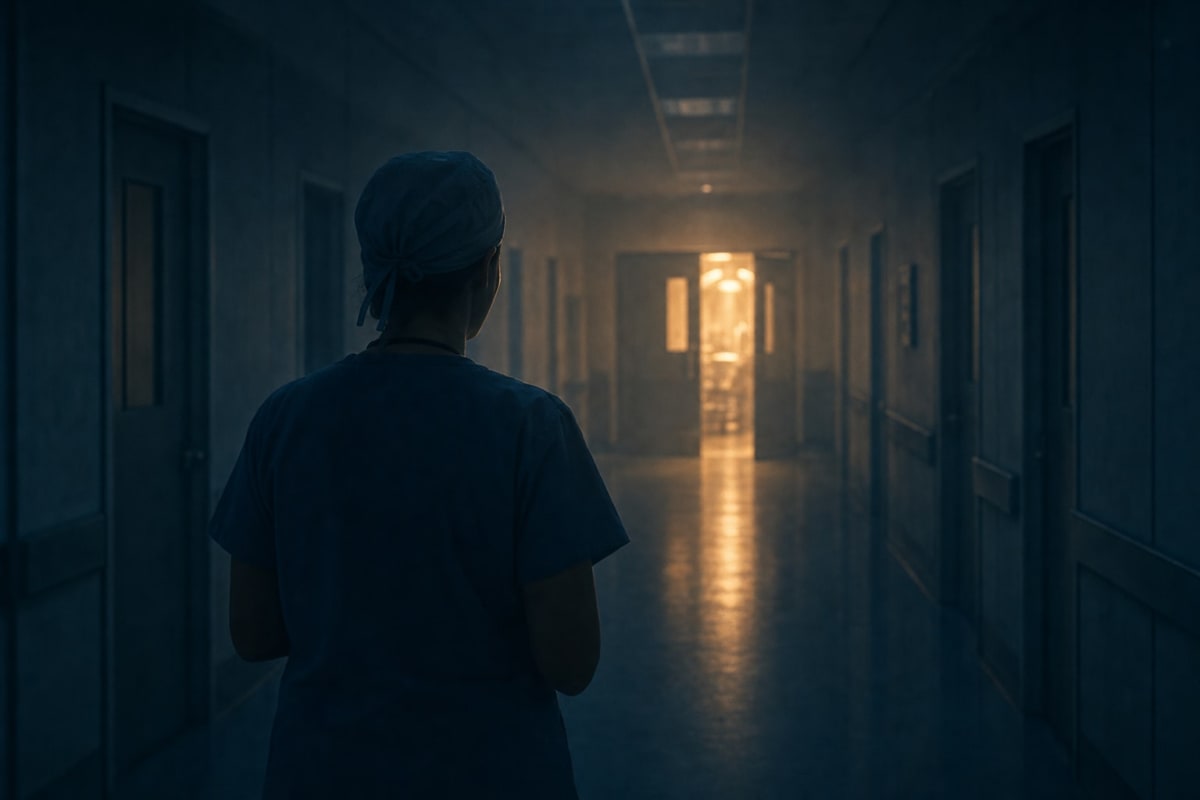
A surgeon's silhouette in a darkened corridor, doors opening toward warm light

Chapter guide

Sixteen chapters, each with a pull-quote and the three things worth walking away with. Tap "Open deep dive" to unpack the context — the ethics of a brand-new field, why the MOMS trial happened, and what burnout actually is.


All men, I just want you to know. At the time.
Dr. Diana Farmer — naming the early pioneers of fetal surgery

How a field got built

Thirty years of fetal surgery, told through the story Dr. Farmer lived — eight turning points from a crazy new idea to a standard of care.

The 1970s
A feminist at a women's college
Dr. Farmer goes to Wellesley and thinks she might be an OB/GYN — until her medical school rotation. "That happy delivering-babies thing was clearly not my jam." She sets her sights on trauma surgery instead.
Medical school
The anatomy of babies
What actually pulls her in is the physiology and embryology of newborns — the complexity of operating on congenital anomalies. And the fact that you don't have to choose: chest, abdomen, pelvis. "I could just kick that can down the road."
The 1980s
San Francisco, by accident
Advised to go west to strengthen a pediatric surgery application, she lands in the birthplace of fetal surgery. "It was a crazy new idea then. No one knew if it was even possible to operate on a pregnant woman and keep them pregnant."
The lab
The staplers that acted like an IUD
Years of work in sheep and non-human primates establish how to enter a uterus and hold a pregnancy. One finding: the surgical staplers in common use left the monkeys unable to conceive again. "Had that not been done, this field might have failed before it got out of the start gates."
The ethics
Staying out of the debate
Dr. Harrison deliberately avoids the argument over whether the fetus is a patient, focusing instead on the science. You needed to understand the natural history of a disorder in a fetus before you acted on it. The focus was on the scientific and medical issues and aspects of the field.
The 1990s
Detroit, and the pioneers
Her pediatric surgery fellowship puts her in the second place doing fetal intervention. She names the pioneers she trained alongside — and then names the obvious: "All men, I just want you to know."
The late '90s
Writing the MOMS grant
As the only woman in the field, she pushes for the first randomized trial — to know whether the benefit to children justified the risk to their mothers. Nobody wanted to run one, but it was so important to know if it was beneficial.
Now
The next generation inherits it
Dr. Bligard walks into a fetal center already built, is told "It's you now," and is already mentoring a junior partner. Her spina bifida team is all women. "That tide is continuing to shift in terms of it just being normal."
Step 1 of 8
Drag, swipe, or tap arrows

Who opened the doors

Neither guest got here alone. Six people and places that made the difference — named, in their own words, across the conversation.

Dr. Michael Harrison
"The father of fetal surgery" — and the guest on Episode 4. The Pied Piper, the most enthusiastic person you could meet, and the one who kept the young field focused on the scientific and medical issues.
Dr. Tony Odibo
Dr. Bligard's division director, who asked the question nobody had: if you love diagnosing it, why don't you want to fix it? He covered her clinics so she could learn. When he left for a chair role: "It's you now."
An inherited fetal center
Dr. Michael Bebbington set it up before her time. "To be able to inherit this already thriving fetal center, I feel very, very lucky" — and she is now passing it on to a junior partner in turn.
The social worker
"The unsung hero, and probably the most important component." In the early days, every patient went through multidisciplinary decision-making — and the make-or-break call was often the social worker's.
The women who went first
Madeleine Albright, Hillary Clinton, and the Wellesley alumnae Dr. Farmer looks back on. "Their barriers were even greater. How dare I chicken out when there's something I'm not sure about doing?"
A center full of women
Two MAs, two nurses, two fetal surgeons, a social worker — a female division director and a female chair above them. "A really amazing place to just be surrounded by women who have done the hard work."

On having it all

Kris asks both guests the hardest question in the interview — whether they ever had to choose. Four answers, from two very different decades. Tap through each.

Asked how she advocated for her own health in a culture that reads any step back from the OR as a lack of dedication, Dr. Farmer laughs.

"I love getting that question, because the answer is: I have no idea."
She has loved being a surgeon the entire time — though her husband reminds her it wasn't quite as rosy as she remembers, and that she did cry in her internship. "If you truly love what you do then you never work a day in your life." She doesn't feel she missed anything. She did a half Ironman for her 60th birthday. "I would do it again. I wish I had more time."

The advice she got in college — and still believes.

You can have it all. Just not at once.
"There are three things in life: you can have a family, you can have a career, and you can have a social life. But you can only have two at any one time." You can have all of it — you just have to stage it. She remembers the moment the kids were launched and self-sufficient and she and her husband "felt like millionaires," after twenty years of loans. Work-life balance, she argues, is the sum total, not the daily arithmetic.

Dr. Bligard's answer, a generation later, is a surprise.

"I sometimes miss being a resident"
She looks back on training through rose-colored glasses, because her personal and work lives were completely intertwined — her best friends were her co-residents. Nine weeks of nights in a row she did not love, and she probably delayed childbearing to get through them. But: "I don't think that I ever had to choose between what I wanted in my career and what I wanted from my life." Her son, asked what mommy does: "She operates on babies in their mom's tummies."

The one thing she wishes she'd seen sooner.

Outsource what doesn't bring you joy
Her mother did everything — worked at the school, ran the house, dishes every night. Dr. Bligard doesn't get joy from chores, so she pays for them. "If you don't get joy from something, just don't do it. If it needs to get done, get someone else to do it for you." What's left is the work she loves and the kids she loves. "I don't want to do laundry — but I can do what I want to do."

A surgeon's playbook

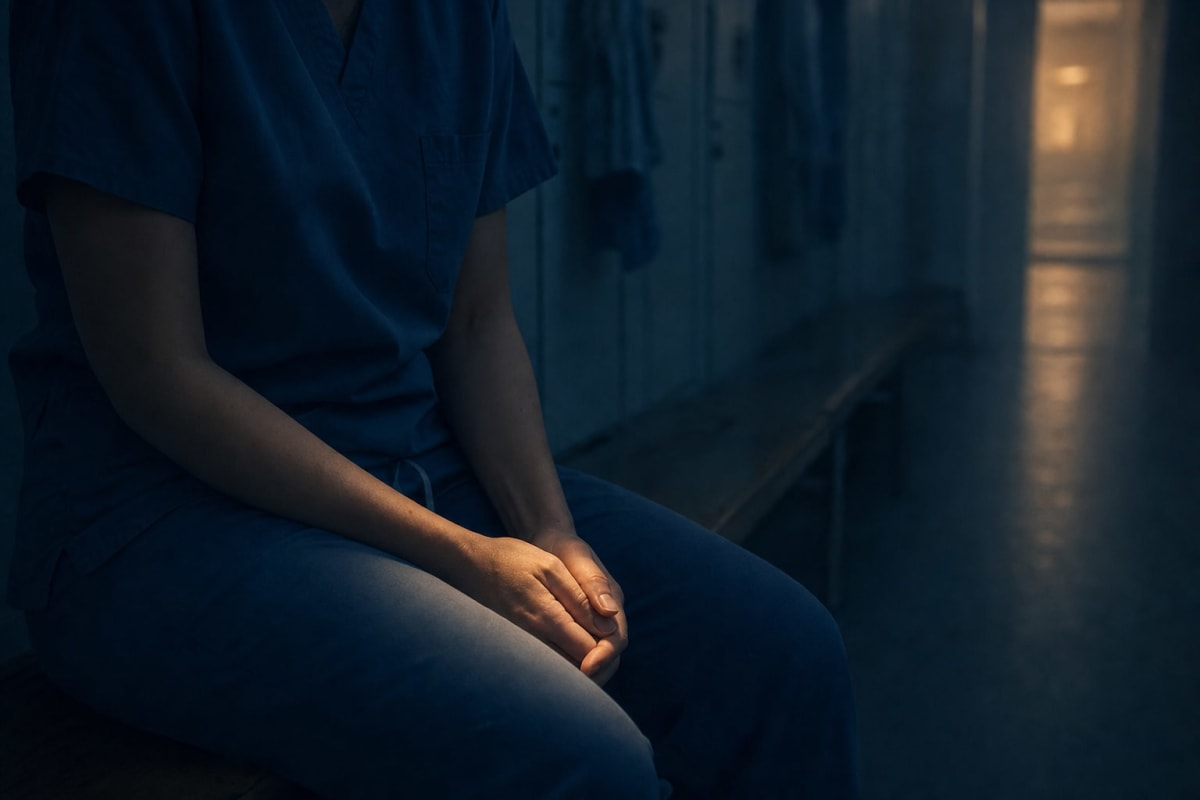
A pair of surgeon's hands at rest, warm light held between them in the dark

"That is the weight we carry. And we don't teach that very well."

Two episodes ago, a fetal care nurse gave this podcast its language for secondary traumatic stress. Here a surgeon of thirty years arrives at the same phrase, unprompted — and argues that burnout has almost nothing to do with hours. Seven principles that run through both guests' answers.

"Burnout has nothing to do with long hours. All of the people who do volunteer work overseas work 24/7 while they're there. It's not about the work."
It's the meaning, the frustrations, and the things you can't control — "the environment that doesn't let you do what you know is the right thing to do." That, Dr. Farmer says, is the moral injury that actually leads to burnout.
"We're pretty good at teaching how to communicate bad news. But that's different — you don't have the disease, you didn't do it."
Carrying your own bad outcome is another thing entirely: "could I have done it better," replaying it in your head. "That is a hard thing to teach, and learn — that I do think comes from experience."
"Finding senior mentors who can help you through that, who have been through that, is incredibly important."
Bad outcomes happen in every surgical field. "What you don't realize is that those experiences are what make you a better surgeon and stronger later on — but you have to recover."
"It took me a bit to realize it wasn't just me that had rupture of membranes after a laser surgery for TTTS. It's everybody."
Dr. Bligard had always counselled patients about the risk — and still internalized it as her fault. The procedure is the best thing available now, and it is still flawed. "In 20 years it's gonna be totally different."
"I am today bothered a little bit by procedures that are getting ahead of actually knowing whether or not they're beneficial."
The MOMS trial proved it could be done. Dr. Bligard's rule for every new intervention raised at conference: happy to be a study center — because "we need to keep doing it for everything we add in, to make sure we are still keeping the pregnant person safe."
"I've learned to not let that totally define me and to move past it, because that's just not worth all the negative energy. And has it happened? Absolutely."
The slights, the difficulties, the bullying — whatever you call it. Her advice: believe in your passion, exert your power where it will have impact, and keep going. She cites the Coolidge line about persistence being omnipotent.
"Someone says, 'Hey, do you want to come see this?' Say yeah, why not. That's how I ended up as a fetal surgeon."
Go in with an open mind, be willing to put yourself out there, be willing to make a mistake — "we don't learn in medicine without getting feedback." And don't shut yourself off to everything else while you chase one thing.

"It's you now."

What a mentor said to Dr. Bligard when he left for a chair position elsewhere. "And I was like, okay — am I ready? And he's like, you are." She had never been fetal-surgery-or-bust; it simply came about, because someone saw it in her and made room. She is doing the same for the person behind her now, and her spina bifida team is all women. The lineage is the point.

Points of light passed hand to hand along a connected chain

Looking forward

Four threads from the close of the conversation — what's driving physicians out, what would keep them in, and what both guests would tell a student. Tap through each.

Not work-life balance. Asked how to keep women from leaving surgery, Dr. Bligard reframes the question entirely.

"That's not necessarily a problem unique to women in medicine"

  • The real driver is the industrialization of medicine — physicians with less and less say
  • Not enough time in clinic, not enough resources — "I just don't feel like I have the time to help the patient like I need to"
  • Formalized leave policies through the GME and ACGME side have genuinely helped
  • "Healthcare should not be a money-making endeavor" — keep the lights on and take care of patients

Dr. Farmer's diagnosis of the American system, in one line.

"Great wealth, but not great health"
Infant mortality, maternal mortality, life expectancy, infectious disease — "we have gone down compared to the rest of the world. Other countries have figured it out a little better." The two things she says have hurt medicine, "believe it or not": Epic and insurance companies. Though she'll concede it's nice to read an x-ray from home — she remembers needing a quarter and a pay phone to answer her beeper.

Why she's still optimistic about the next phase.

Give the relationship back
"How do we have that physician-patient relationship not as interfered with, for the sake of standardization?" Disease isn't standardized — and in fetal therapy, every family, every diagnosis, and now every state and its limitations are unique. The administrative load is "way out of balance." Her hope is that the next phase of technology actually improves it. "We've just got to get people through this."

To the medical student wondering if there's room for her.

"Have a blast. Do it."
Dr. Farmer: "It is a huge privilege to do what we do — to hold someone's life in our hands and make an impact in a very intimate way that other professions don't. Every time I've been discouraged I found something new." Dr. Bligard: go in with an open mind, say yes, don't shut yourself off to everything else. "Truly, as an OB/GYN and MFM and a fetal surgeon, I do all of medicine."

When women rise, they don't rise alone. They bring others with them.
Kris Rimbos — closing the episode

A place at the table

Kris closes on the women who came before, the women standing beside, and the women who will lead us forward. "To the women listening who are considering a career in medicine, surgery, or fetal care — there's a place for you at the table. And if there isn't a seat, perhaps you're meant to build one."

Figures ascending a path of light toward a warm sunrise

Share these moments

Three short clips from the conversation — tap to play, or download to post on Instagram, Facebook, or wherever you share. Send one to a trainee, a colleague, or a young woman deciding what to do with her career.

“The patient as a whole person”
Dr. Bligard on what fetal surgery can’t fix · 0:35
Post caption
Dr. Kathy Bligard on how she holds the technical and the emotional together: thinking about the patient as a whole person, and what that patient’s values are.
#WomenInMedicine #FetalSurgery #MaternalHealth #FetalTherapy #WomenInSurgery #TheFetalFrontline #FetalTherapyNurseNetwork
Download clip
“That is the weight we carry”
The part medicine doesn't teach · 0:34
Post caption
We teach anatomy. We teach medicine. We teach how to deliver bad news. Dr. Diana Farmer on the one thing surgical training still doesn't prepare anyone for.
#WomenInMedicine #SurgicalTraining #PhysicianWellbeing #MoralInjury #FetalSurgery #TheFetalFrontline #FetalTherapyNurseNetwork
Download clip
“Then some guy says the same thing”
On being heard in the room · 0:30
Post caption
Thirty years in, a department chair. It still happens. Dr. Diana Farmer on persistence, and refusing to let it define you.
#WomenInMedicine #WomenInSurgery #WomenInLeadership #WomenInSTEM #FetalTherapy #TheFetalFrontline #FetalTherapyNurseNetwork
Download clip
Stylized microphone with pink accent

Thanks for listening.

If this conversation resonated, share it with a colleague, a trainee, or a young woman deciding what to do with her career. Success, as Kris puts it, isn't measured only by the procedures performed or the research published — it's measured by the people we inspire and the opportunities we create. Subscribe so you don't miss the next conversation on The Fetal Frontline.

Learn about FTNN
Deep dive

Chapter

Don't miss the next one

How to subscribe

The Fetal Frontline — FTNN Podcast

The FTNN Podcast publishes episodes roughly every month. You can subscribe wherever you listen:

  • Apple Podcasts — search "The Fetal Frontline"
  • Spotify — search "Fetal Therapy Nurse Network"
  • Amazon Music & YouTube — direct RSS feed coming soon

Reviews genuinely help others discover the show — if this episode resonated, leave one. And if you'd like to suggest a future guest or topic, reach out via the FTNN website.

Shortcuts

Quick Glossary

Terms used in this episode
Fetal surgery
Surgery performed on a baby before birth, treating two patients at once — the fetus and the pregnant person carrying it.
Maternal-fetal medicine (MFM)
The OB subspecialty for high-risk pregnancy — Dr. Bligard's field. Diabetes, hypertension, and heart failure in pregnancy, plus fetal diagnostics.
Pediatric surgery
Surgery on infants and children, including congenital anomalies — Dr. Farmer's training route into the fetal field.
MOMS trial
The Management of Myelomeningocele Study — the first randomized trial in fetal surgery. Dr. Farmer wrote the initial grant.
Spina bifida / myelomeningocele
A spinal-cord defect that can be repaired in utero. Highly visible worldwide, and the subject of the MOMS trial.
TTTS
Twin-to-twin transfusion syndrome — treated by laser surgery in utero. Rupture of membranes is a known risk.
Diaphragmatic hernia
A congenital defect in the diaphragm. Improvements in neonatal care once outstripped the benefit of in-utero repair — an example of a shifting risk-benefit ratio.
Amniocentesis
A diagnostic test sampling amniotic fluid for genetic information. Dr. Bligard had one in her own pregnancy and shares that with nervous patients.
Fetal intervention
Any treatment or procedure performed on a baby before birth to address a diagnosed condition.
Natural history
How a condition behaves if left alone. A founding principle of the field: know it before you intervene — some lesions resolve on their own.
Moral injury
The harm of being prevented from doing what you know is right. Dr. Farmer argues this — not long hours — is what actually causes burnout.
Secondary traumatic stress
The trauma a caregiver absorbs by witnessing someone else's — the subject of Episode 5, and the phrase Dr. Farmer reaches for here.
M&M
Morbidity and mortality conference — the surgical tradition of reviewing complications so others can learn from them.
GME / ACGME
Graduate Medical Education and its accrediting council — the bodies that have formalized parental and medical leave policies in training.
FTNN
The Fetal Therapy Nurse Network — the community of nurses and social workers behind this podcast.
Ep 6: Women In Medicine: Breaking Barriers, Changing Medicine
Dr. Diana Farmer & Dr. Kathy Bligard, and host Kris Rimbos